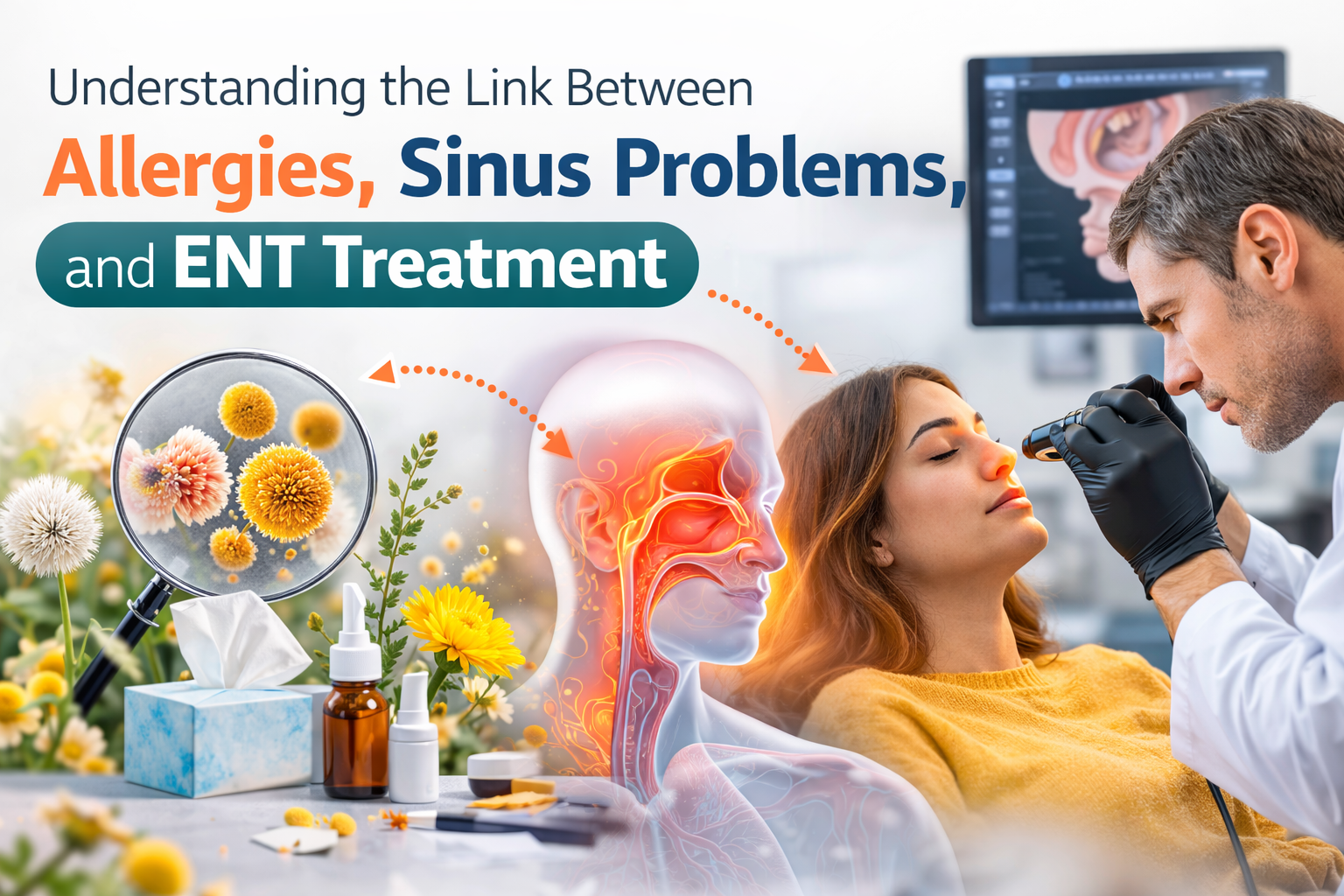
Understanding the Link Between Allergies, Sinus Problems, and ENT Treatment
Millions of people experience symptoms such as nasal congestion, sinus pressure, sneezing, and persistent headaches every year. While these symptoms may seem like routine seasonal discomforts, they often point to a deeper connection between allergies and sinus health. The ear, nose, and throat system works as an interconnected network that helps regulate breathing, filter airborne particles, and maintain healthy airflow. When allergies disrupt this delicate system, sinus problems frequently follow.
Allergies trigger inflammation in the nasal passages, which can narrow the pathways responsible for draining the sinuses. When drainage becomes restricted, mucus begins to accumulate, creating pressure and discomfort inside the sinus cavities. Over time, this buildup can lead to infections, chronic congestion, and recurring sinus headaches.
Understanding the relationship between allergies and sinus conditions is essential for effective treatment. Many people attempt to manage these symptoms with temporary remedies such as decongestants or antihistamines. While these medications can provide short-term relief, they often fail to address the underlying causes of chronic inflammation.
ENT doctors specialize in diagnosing and treating conditions that affect the ear, nose, and throat. Their expertise allows them to identify how allergies influence sinus health and develop treatment strategies that provide lasting relief. As more patients learn about this connection, they are turning to ENT specialists for comprehensive care that targets the root causes of their symptoms.
The Role of the Immune System in Allergic Reactions
Allergies occur when the immune system mistakenly identifies harmless substances as threats. Common allergens include pollen, dust mites, mold spores, and pet dander. When these particles enter the body through the nose or respiratory system, the immune system releases chemicals such as histamine to defend against what it perceives as danger.
This immune response causes inflammation within the nasal passages and surrounding tissues. Blood vessels expand, mucus production increases, and the lining of the nose becomes swollen. These changes lead to symptoms such as sneezing, nasal congestion, itching, and watery eyes.
While this reaction is intended to protect the body, it often creates conditions that disrupt normal sinus function. The swelling inside the nasal passages narrows the tiny openings that allow the sinuses to drain. When these drainage pathways become blocked, mucus becomes trapped within the sinus cavities.
This trapped mucus creates pressure and discomfort while providing an environment where bacteria or viruses can grow. As a result, individuals with allergies often experience recurring sinus infections and persistent congestion.
ENT specialists are trained to evaluate how the immune system’s allergic response affects sinus health. By identifying specific allergens and understanding how they influence inflammation, ENT doctors can design treatment plans that reduce symptoms and restore normal sinus drainage.
How Allergies Lead to Chronic Sinus Problems
Chronic sinus problems frequently develop as a direct result of untreated or poorly managed allergies. When allergic inflammation persists over long periods of time, the sinus passages remain swollen and partially blocked. This ongoing obstruction prevents mucus from draining effectively, leading to continuous congestion and pressure.
Patients with chronic sinus issues often report symptoms such as facial pain, headaches, fatigue, and difficulty breathing through the nose. These symptoms may worsen during allergy seasons when pollen levels rise and the immune response becomes more intense.
In many cases, individuals may not realize that their sinus problems are directly linked to allergies. They may treat each sinus infection as an isolated issue without recognizing the underlying inflammatory process that continues to trigger new episodes.
ENT doctors play a crucial role in identifying this connection. Through detailed examinations and advanced diagnostic techniques, they can determine whether allergic inflammation is contributing to recurring sinus infections.
Once this relationship is identified, ENT specialists can implement treatments that target both the allergy and the sinus condition. This integrated approach helps prevent future infections and improves overall respiratory health.
Environmental Factors That Influence Allergies and Sinus Health
Modern environments expose individuals to numerous allergens and irritants that can affect the respiratory system. Seasonal pollen from trees, grasses, and weeds is one of the most common triggers of allergic reactions. During certain times of the year, pollen levels can rise dramatically, increasing the likelihood of inflammation within the nasal passages.
Indoor environments also contain allergens that contribute to sinus problems. Dust mites, mold spores, and pet dander can accumulate in homes and workplaces, leading to persistent exposure throughout the year.
Air pollution is another factor that influences respiratory health. Pollutants in the air can irritate the lining of the nose and sinuses, making them more sensitive to allergens. In urban areas, the combination of pollen and pollution can intensify allergic reactions and increase the severity of sinus symptoms.
ENT doctors consider these environmental influences when evaluating patients with allergies and sinus conditions. By understanding the triggers present in a patient’s environment, they can recommend strategies that reduce exposure and improve overall respiratory comfort.
The Importance of Accurate Diagnosis by ENT Specialists
One of the most significant challenges in managing allergies and sinus problems is determining the exact cause of symptoms. Many conditions affecting the ear, nose, and throat share similar symptoms, making it difficult for patients to identify the source of their discomfort.
ENT doctors use specialized diagnostic tools to evaluate the nasal passages and sinus structures with precision. Endoscopic examinations allow them to observe the interior of the nose and identify areas of inflammation, blockage, or structural abnormalities.
Allergy testing is another important component of diagnosis. By identifying specific allergens that trigger symptoms, ENT specialists can tailor treatment plans that address the underlying cause of inflammation.
Accurate diagnosis ensures that patients receive the most appropriate care for their condition. Rather than relying on temporary remedies, they can pursue treatments that target the root of their symptoms and provide lasting relief.
Structural Issues That Can Worsen Allergy Symptoms
In some cases, structural abnormalities within the nose can intensify the effects of allergies and contribute to sinus problems. Conditions such as a deviated septum or enlarged nasal turbinates may restrict airflow and make it more difficult for the sinuses to drain properly.
When these structural issues combine with allergic inflammation, the result can be persistent congestion and recurring infections. Even mild allergies may cause significant discomfort when airflow through the nasal passages is already limited.
ENT specialists are uniquely qualified to identify these anatomical concerns. Through imaging and physical examination, they can determine whether structural factors are contributing to a patient’s symptoms.
Addressing these issues often improves the effectiveness of allergy treatments and helps restore healthy breathing.
The Impact of Allergies on Daily Life
Allergies and sinus problems can significantly affect a person’s daily routine. Persistent congestion and sinus pressure may interfere with sleep, making it difficult to feel rested and energized during the day.
Fatigue, headaches, and difficulty concentrating are common among individuals with ongoing allergy symptoms. These challenges can reduce productivity at work or school and make it harder to participate in social activities.
For some people, chronic sinus issues also affect their sense of smell and taste, further diminishing their quality of life. These sensory changes can impact appetite, enjoyment of food, and overall well-being.
ENT doctors understand the wide-ranging effects of allergies and sinus conditions. Their goal is not only to relieve physical symptoms but also to help patients regain comfort and confidence in their daily lives.
Advanced ENT Treatments for Allergy and Sinus Relief
Medical advancements have significantly improved the treatment options available for individuals with allergies and sinus problems. ENT specialists now have access to innovative techniques that address both inflammation and structural issues within the nasal passages.
Minimally invasive procedures allow doctors to restore proper sinus drainage while minimizing recovery time for patients. These treatments can open blocked sinus pathways and reduce the frequency of infections.
Patients interested in learning about these innovations often explore The Medical Advances Transforming Balloon Sinuplasty for Chronic Sinus Conditions, which explains how modern ENT procedures are helping people overcome persistent sinus issues.
Through these advanced treatments, ENT doctors can provide solutions that improve breathing and reduce the long-term impact of allergies on sinus health.
Recognizing the Signs That Require ENT Care
While mild allergy symptoms may be manageable with basic remedies, persistent or severe symptoms often require professional evaluation. Individuals who experience ongoing nasal congestion, frequent sinus infections, or difficulty breathing through the nose should consider consulting an ENT specialist.
ENT doctors can determine whether allergies are the primary cause of symptoms or if other conditions are contributing to respiratory discomfort. Their comprehensive approach ensures that all potential factors are addressed during diagnosis and treatment.
Patients seeking additional insights into how chronic nasal symptoms relate to ENT conditions may benefit from reading What Persistent Nasal Congestion May Reveal About Underlying ENT Conditions, which explores the underlying causes of long-term nasal blockage.
Early evaluation often prevents minor issues from developing into chronic conditions that require more extensive treatment.
The Role of Preventive Care in Managing Allergies
Preventive care plays a crucial role in managing allergies and protecting sinus health. ENT specialists frequently guide patients in identifying triggers and adopting strategies that reduce exposure to allergens.
Maintaining clean indoor environments, improving air filtration, and monitoring pollen levels can all help minimize allergic reactions. When combined with medical treatments designed to control inflammation, these preventive measures provide a powerful defense against recurring symptoms.
ENT doctors emphasize the importance of consistent care and monitoring. By addressing symptoms early and adjusting treatment plans as needed, patients can maintain healthier sinuses and avoid the complications associated with chronic inflammation.
A Comprehensive Approach to Respiratory Health
Understanding the link between allergies, sinus problems, and ENT treatment is essential for achieving lasting relief. The ear, nose, and throat system functions as a complex network that influences breathing, sleep, and overall well-being.
ENT doctors possess the specialized knowledge required to evaluate this system thoroughly. Their ability to diagnose underlying conditions and implement targeted treatments allows patients to overcome symptoms that may have persisted for years.
Through advanced diagnostics, personalized care, and innovative treatment options, ENT specialists continue to transform the way allergies and sinus conditions are managed.
A Future of Improved Breathing and Sinus Health
As awareness of respiratory health grows, more individuals are recognizing the importance of seeking specialized care for allergies and sinus problems. ENT doctors are at the forefront of this effort, providing expertise that helps patients breathe easier and live more comfortably.
By addressing the underlying causes of inflammation and restoring proper sinus function, ENT specialists enable patients to move beyond temporary symptom relief. Their work plays a vital role in improving quality of life and ensuring that individuals can enjoy daily activities without the burden of chronic congestion or sinus pressure.
The connection between allergies, sinus health, and ENT treatment highlights the importance of expert care. With the guidance of skilled ENT doctors, patients can achieve lasting relief and a healthier future for their respiratory system.