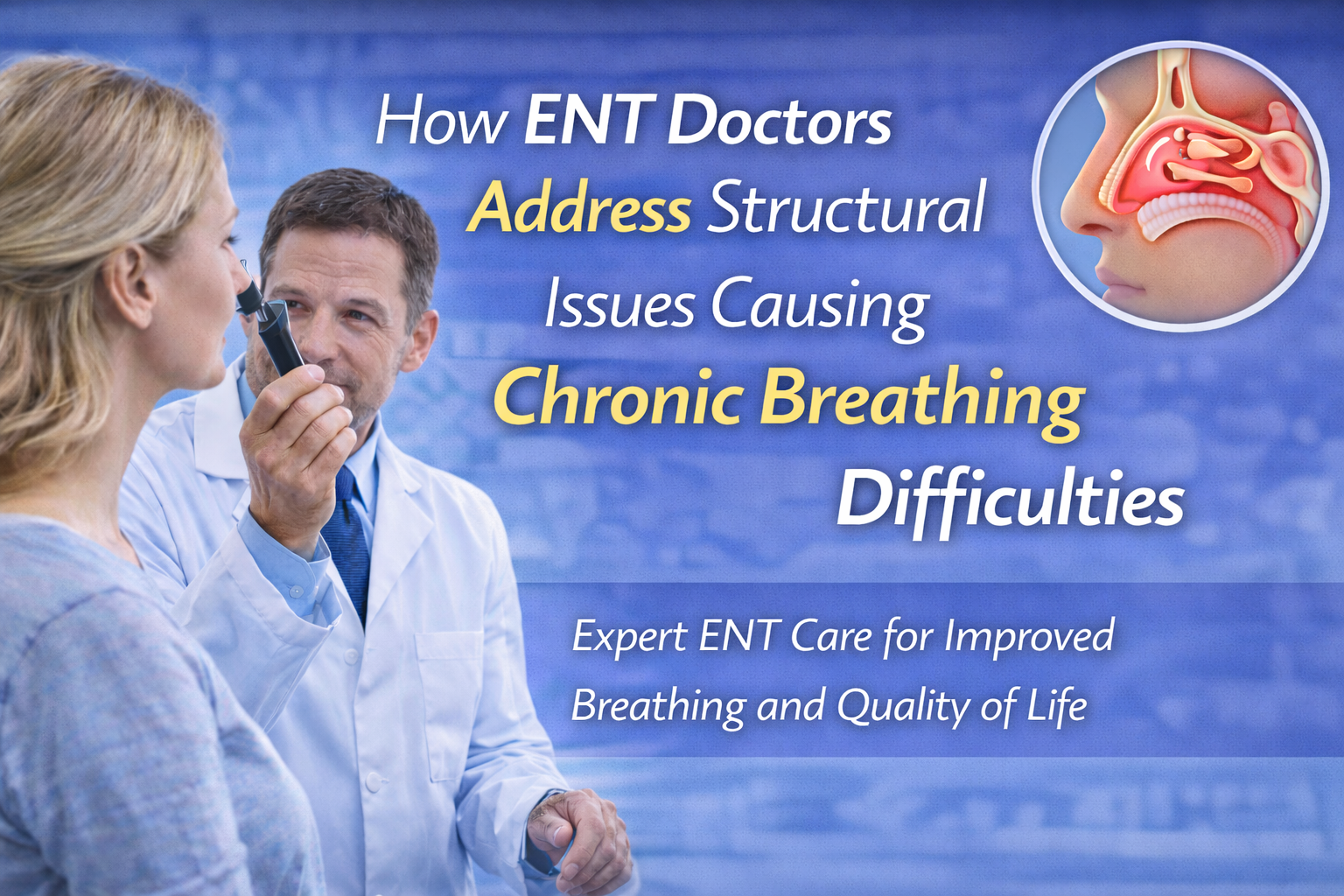
How ENT Doctors Address Structural Issues Causing Chronic Breathing Difficulties
Breathing is one of the most fundamental functions of the human body, yet for many individuals, it is not as effortless as it should be. Chronic breathing difficulties can silently affect daily life, leading to fatigue, poor sleep, reduced concentration, and an overall decline in well-being. While environmental factors and temporary illnesses can contribute to breathing problems, structural issues within the nose and airway are often the underlying cause of persistent symptoms. This is where the expertise of ENT doctors becomes indispensable.
ENT specialists are uniquely trained to evaluate and treat the complex structures of the ear, nose, and throat. Their deep understanding of nasal anatomy, airway function, and sinus health allows them to identify structural abnormalities that interfere with normal breathing. Unlike temporary solutions that merely alleviate symptoms, ENT doctors focus on addressing the root cause, providing long-term relief and significantly improving quality of life.
Understanding Structural Causes of Chronic Breathing Difficulties
Chronic breathing difficulties are often linked to structural abnormalities within the nasal passages. These abnormalities can include a deviated septum, enlarged turbinates, nasal valve collapse, or other anatomical irregularities that restrict airflow. While some individuals are born with these conditions, others develop them due to injury, aging, or prolonged inflammation.
The nasal structure plays a critical role in regulating airflow, filtering particles, and maintaining proper humidity levels. When this structure is compromised, it disrupts the natural flow of air, forcing individuals to breathe through their mouths or struggle with constant congestion. Over time, this can lead to additional complications such as dry throat, snoring, and even sleep apnea.
ENT doctors approach these conditions with a comprehensive understanding of how structure and function are interconnected. By identifying the specific abnormalities affecting each patient, they are able to develop targeted treatment plans that restore normal breathing.
Why Structural Issues Often Go Undiagnosed
One of the biggest challenges in addressing chronic breathing difficulties is that structural issues often go unnoticed. Many patients attribute their symptoms to allergies, seasonal changes, or temporary illnesses. As a result, they rely on over-the-counter medications that provide only temporary relief.
ENT specialists recognize that persistent symptoms are often a sign of a deeper issue. They use advanced diagnostic tools to evaluate the internal structures of the nose and identify abnormalities that may not be visible through standard examination. This level of precision allows them to uncover the true cause of breathing difficulties and provide effective solutions.
For individuals experiencing ongoing nasal blockage, understanding the warning signs is crucial. Insights from When Nasal Blockage Becomes Serious: Signs You Need an ENT Specialist Immediately highlight the importance of recognizing when symptoms require professional evaluation. This reinforces the need for timely diagnosis and intervention.
The Role of Accurate Diagnosis in Treating Structural Issues
Accurate diagnosis is the foundation of effective treatment for structural breathing problems. ENT doctors utilize a combination of clinical expertise and advanced technology to assess nasal anatomy and airway function. This may include nasal endoscopy, imaging studies, and detailed patient history analysis.
Nasal endoscopy allows specialists to examine the internal structures of the nose in real time, providing a clear view of blockages, inflammation, and abnormalities. Imaging studies such as CT scans offer additional insights into sinus health and structural variations. By combining these tools, ENT doctors achieve a comprehensive understanding of the condition.
The importance of precise diagnosis cannot be overstated. Without identifying the exact cause of breathing difficulties, treatments may fail to provide lasting relief. Patients seeking a deeper understanding of this process can explore The Importance of Accurate Diagnosis in ENT Care for Effective Treatment Outcomes, which emphasizes how precision leads to better results.
Common Structural Conditions Treated by ENT Doctors
Structural abnormalities that affect breathing can vary widely in severity and complexity. A deviated septum is one of the most common conditions, occurring when the nasal septum is displaced, restricting airflow on one or both sides of the nose. Enlarged turbinates, which are structures that help filter and humidify air, can also contribute to blockage when they become swollen.
Nasal valve collapse is another condition that can significantly impact breathing. This occurs when the narrowest part of the nasal airway weakens, leading to reduced airflow. In some cases, multiple structural issues may coexist, making diagnosis and treatment more complex.
ENT specialists are trained to identify these conditions and determine the most appropriate course of action. Their ability to address multiple factors simultaneously ensures that patients receive comprehensive care.
Advanced Treatment Options for Structural Breathing Problems
Modern ENT medicine offers a range of advanced treatment options designed to address structural issues and restore normal breathing. These treatments are tailored to the specific needs of each patient, ensuring optimal outcomes.
Minimally invasive procedures are often used to correct structural abnormalities with minimal discomfort and recovery time. Techniques such as septoplasty can straighten a deviated septum, while turbinate reduction can decrease the size of enlarged turbinates. These procedures are designed to improve airflow and enhance overall nasal function.
ENT doctors prioritize treatments that not only address the immediate issue but also provide long-term benefits. By focusing on structural correction, they help patients achieve lasting relief and improved quality of life.
The Impact of Structural Corrections on Daily Life
Addressing structural issues in the nasal passages can have a profound impact on daily life. Patients often experience significant improvements in breathing, allowing them to engage in activities with greater ease and comfort. Better airflow also contributes to improved sleep quality, reducing fatigue and enhancing overall energy levels.
In addition to physical benefits, patients frequently report increased confidence and well-being. The ability to breathe freely can transform everyday experiences, from simple tasks to social interactions. ENT doctors play a crucial role in facilitating these changes, providing care that extends beyond symptom relief.
The Connection Between Breathing and Overall Health
Breathing difficulties are not isolated issues; they can affect multiple aspects of health. Poor airflow can lead to disrupted sleep patterns, which in turn impact cognitive function, mood, and overall productivity. Chronic breathing problems may also contribute to conditions such as sleep apnea, which carries additional health risks.
ENT specialists understand these connections and approach treatment with a holistic perspective. By addressing structural issues, they help improve not only breathing but also overall health and well-being. This comprehensive approach ensures that patients experience lasting benefits.
Personalized Care for Optimal Outcomes
Every patient’s experience with chronic breathing difficulties is unique, requiring a personalized approach to treatment. ENT doctors take the time to understand each patient’s specific condition, medical history, and lifestyle factors. This allows them to develop treatment plans that are tailored to individual needs.
Personalized care ensures that patients receive treatments that are both effective and sustainable. By focusing on the unique aspects of each case, ENT specialists achieve outcomes that align with the patient’s goals and expectations.
The Importance of Early Intervention
Early intervention is key to preventing the progression of structural breathing problems. When issues are addressed at an early stage, treatment options are often simpler and more effective. Delaying care can lead to more complex conditions that require extensive intervention.
ENT doctors emphasize the importance of seeking professional evaluation when symptoms persist or worsen. By taking proactive steps, patients can avoid complications and achieve better outcomes.
How ENT Specialists Combine Expertise and Innovation
The field of ENT medicine continues to evolve, with new technologies and techniques enhancing the ability to diagnose and treat structural issues. ENT doctors are at the forefront of these advancements, utilizing cutting-edge tools to deliver precise and effective care.
Innovations such as high-definition imaging and minimally invasive procedures have transformed the way structural conditions are treated. These developments allow for greater accuracy, reduced recovery time, and improved patient experiences.
By combining expertise with innovation, ENT specialists provide a level of care that is both advanced and patient-centered.
Long-Term Benefits of Addressing Structural Issues
The benefits of treating structural breathing problems extend far beyond immediate relief. Patients who undergo corrective procedures often experience long-term improvements in breathing, sleep, and overall health. These changes contribute to a higher quality of life and greater overall satisfaction.
ENT doctors focus on delivering results that are sustainable and impactful. By addressing the root cause of symptoms, they ensure that patients can enjoy lasting benefits without the need for ongoing temporary treatments.
Restoring Breath, Restoring Life
Chronic breathing difficulties caused by structural issues can significantly impact every aspect of life. From disrupted sleep to reduced energy levels, the effects are far-reaching. ENT doctors play a vital role in addressing these challenges, providing expert diagnosis and advanced treatment options that restore normal breathing.
By focusing on the root cause of symptoms and utilizing personalized care, ENT specialists deliver outcomes that are both effective and long-lasting. Their ability to combine medical expertise with innovative techniques ensures that patients receive the highest standard of care.
For individuals struggling with chronic breathing difficulties, seeking the guidance of an ENT specialist is a crucial step toward reclaiming comfort, health, and quality of life.